Malabar Red Spinach Seeds
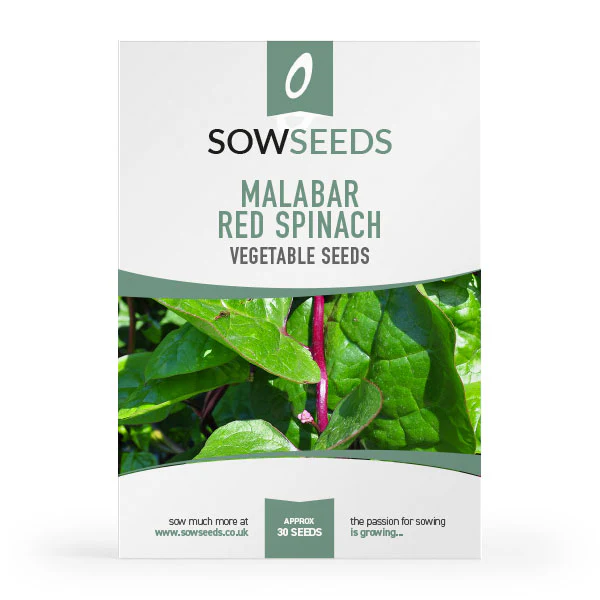
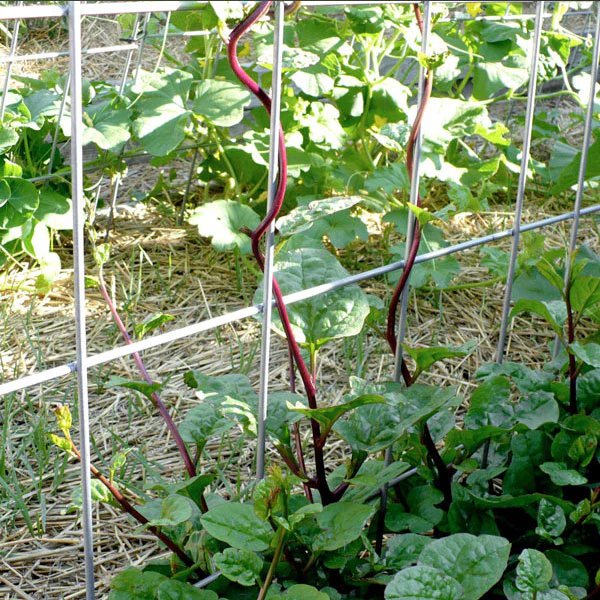
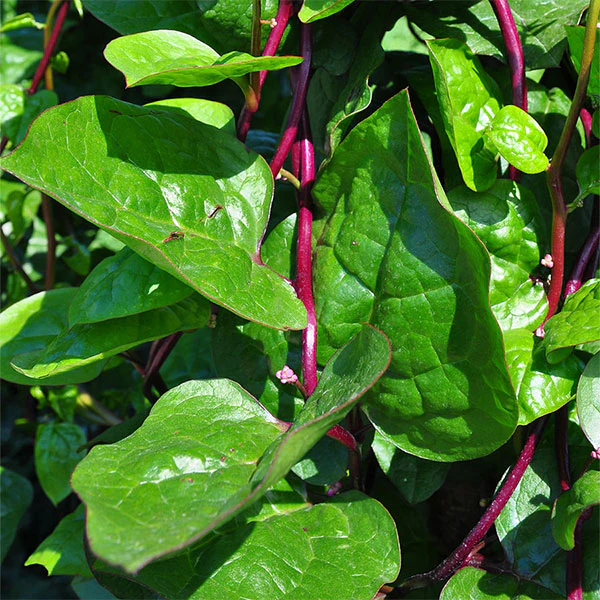
Malabar Red Spinach, also known as Malabar or Ceylon spinach, is not actually spinach at all, but the leaves do resemble it and can be eaten as such. It is actually a climbing vine native to tropical Asia and has highly nutritious, fleshy, succulent leaves against wonderfully dark red/purple stems, that can also be grown as a baby leaf. It is a tender perennial, best treated as an annual.
This tropical green is popular in Asian, Chinese and Thai cooking. The heat-loving plants grow into vines lined with shiny green, oval-shaped leaves that have a distinctive slippery texture.
Use the leaves fresh in salads - they have a succulent, crisp taste with hints of citrus and pepper - or cook them like traditional spinach. Ideal for patio container or garden as they only use a small footprint on the ground, yet produce lots vertically. Compact habit.
Pack Information
| Seed Quantity: | Approx 30 seeds per pack. |
When to Sow Malabar Red Spinach Vegetable Seeds
| Jan | Feb | Mar | Apr | May | Jun | Jul | Aug | Sep | Oct | Nov | Dec | |
|---|---|---|---|---|---|---|---|---|---|---|---|---|
| Indoor Sowing |

|
|
|
|
 |
|
|
|||||
| Outdoor Sowing | |
|
|
|
|
|
|
|
|
Sowing Information
| Site: |
Prefers moist, fertile soil in full sun. Will require a framework on which to climb
|
| When to Sow: |
January to April
|
| How to Sow: |
Sow indoors in late winter/ early spring. Sow directly after the danger of frost has passed. Surface sow onto moist, well-drained seed compost. Just cover with a sprinkling of soil. Ideal temp. 18-24°C. Germination takes 14-21 days approx. Transplant seedlings when large enough to handle grow on. Acclimatise and plant out once the danger of frost has passed or grow on in the greenhouse. A 12L pot or a growbag is ideal, alternatively 25cm spacing directly. Will require support on which to climb.
|
| Care: |
It is best to pick leaves regularly otherwise they become large & bitter and begin to flower shortening the lifespan of the plant.
|
| Harvest: | January sowings ready early May onwards |
Product Information
Product Information
Shipping & Returns
Shipping & Returns
Malabar Red Spinach Seeds
Malabar Red Spinach Seeds
Malabar Red Spinach, also known as Malabar or Ceylon spinach, is not actually spinach at all, but the leaves do resemble it and can be eaten as such. It is actually a climbing vine native to tropical Asia and has highly nutritious, fleshy, succulent leaves against wonderfully dark red/purple stems, that can also be grown as a baby leaf. It is a tender perennial, best treated as an annual.
This tropical green is popular in Asian, Chinese and Thai cooking. The heat-loving plants grow into vines lined with shiny green, oval-shaped leaves that have a distinctive slippery texture.
Use the leaves fresh in salads - they have a succulent, crisp taste with hints of citrus and pepper - or cook them like traditional spinach. Ideal for patio container or garden as they only use a small footprint on the ground, yet produce lots vertically. Compact habit.
Pack Information
| Seed Quantity: | Approx 30 seeds per pack. |
When to Sow Malabar Red Spinach Vegetable Seeds
| Jan | Feb | Mar | Apr | May | Jun | Jul | Aug | Sep | Oct | Nov | Dec | |
|---|---|---|---|---|---|---|---|---|---|---|---|---|
| Indoor Sowing |
|
|
|
|
|
|
|
|||||
| Outdoor Sowing | |
|
|
|
|
|
|
|
|
Sowing Information
| Site: |
Prefers moist, fertile soil in full sun. Will require a framework on which to climb
|
| When to Sow: |
January to April
|
| How to Sow: |
Sow indoors in late winter/ early spring. Sow directly after the danger of frost has passed. Surface sow onto moist, well-drained seed compost. Just cover with a sprinkling of soil. Ideal temp. 18-24°C. Germination takes 14-21 days approx. Transplant seedlings when large enough to handle grow on. Acclimatise and plant out once the danger of frost has passed or grow on in the greenhouse. A 12L pot or a growbag is ideal, alternatively 25cm spacing directly. Will require support on which to climb.
|
| Care: |
It is best to pick leaves regularly otherwise they become large & bitter and begin to flower shortening the lifespan of the plant.
|
| Harvest: | January sowings ready early May onwards |
Original: $2.66
-65%$2.66
$0.93Product Information
Product Information
Shipping & Returns
Shipping & Returns
Description
Malabar Red Spinach, also known as Malabar or Ceylon spinach, is not actually spinach at all, but the leaves do resemble it and can be eaten as such. It is actually a climbing vine native to tropical Asia and has highly nutritious, fleshy, succulent leaves against wonderfully dark red/purple stems, that can also be grown as a baby leaf. It is a tender perennial, best treated as an annual.
This tropical green is popular in Asian, Chinese and Thai cooking. The heat-loving plants grow into vines lined with shiny green, oval-shaped leaves that have a distinctive slippery texture.
Use the leaves fresh in salads - they have a succulent, crisp taste with hints of citrus and pepper - or cook them like traditional spinach. Ideal for patio container or garden as they only use a small footprint on the ground, yet produce lots vertically. Compact habit.
Pack Information
| Seed Quantity: | Approx 30 seeds per pack. |
When to Sow Malabar Red Spinach Vegetable Seeds
| Jan | Feb | Mar | Apr | May | Jun | Jul | Aug | Sep | Oct | Nov | Dec | |
|---|---|---|---|---|---|---|---|---|---|---|---|---|
| Indoor Sowing |
|
|
|
|
|
|
|
|||||
| Outdoor Sowing | |
|
|
|
|
|
|
|
|
Sowing Information
| Site: |
Prefers moist, fertile soil in full sun. Will require a framework on which to climb
|
| When to Sow: |
January to April
|
| How to Sow: |
Sow indoors in late winter/ early spring. Sow directly after the danger of frost has passed. Surface sow onto moist, well-drained seed compost. Just cover with a sprinkling of soil. Ideal temp. 18-24°C. Germination takes 14-21 days approx. Transplant seedlings when large enough to handle grow on. Acclimatise and plant out once the danger of frost has passed or grow on in the greenhouse. A 12L pot or a growbag is ideal, alternatively 25cm spacing directly. Will require support on which to climb.
|
| Care: |
It is best to pick leaves regularly otherwise they become large & bitter and begin to flower shortening the lifespan of the plant.
|
| Harvest: | January sowings ready early May onwards |