Squash Turks Turban (Winter) Seeds
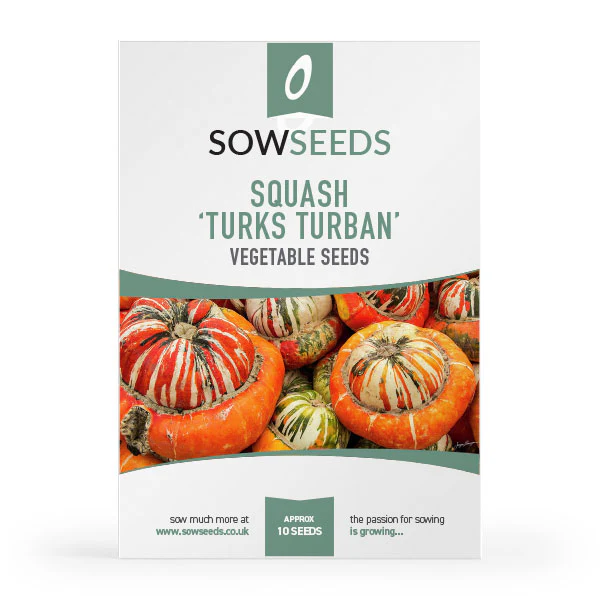
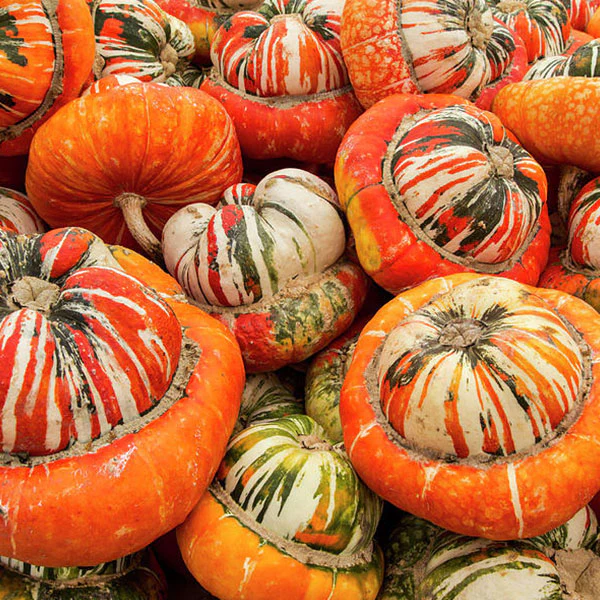
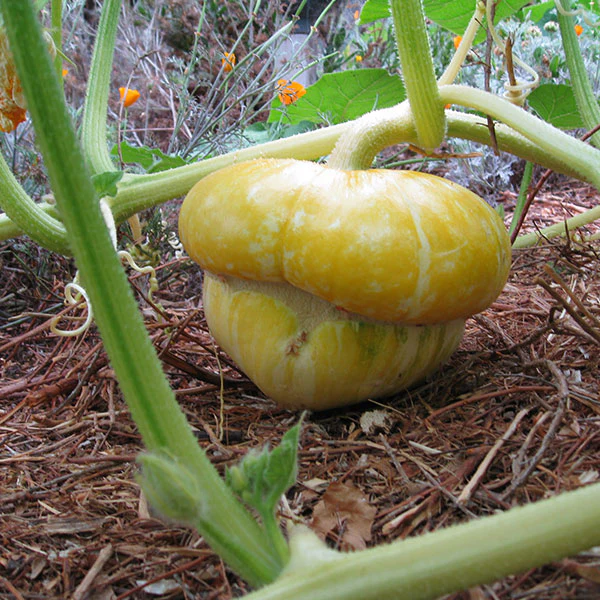
Squash Turks Turban is a much requested, quirky looking and highly decorative variety of squash. These bright and colourful fruits have an extra knobbly, often striped, hat atop the rounded bottom. For the best flavour, pick young.
The distinctive shape and colouration of this variety may seem more ornamental than edible, but Turks Turban is a delicious winter squash for baking, steaming or turning into soup. The trailing plants produce fruits up to 30cm/12in across, the flesh of which is sweet and golden orange. This variety is also a fine 'keeper'.
This is one of the most spectacular of all the squashes: a bright orange lower half is often streaked with green and topped with a hat-like, knobbly green topknot. The fruit is so handsome, in fact, that it's often used as a harvest decoration, but it also makes good eating with a taste similar to butternut squash.
Pack Information
| Seed Quantity: | Approx 10 seeds per pack. |
When to Sow Squash Turks Turban Vegetable Seeds
| Jan | Feb | Mar | Apr | May | Jun | Jul | Aug | Sep | Oct | Nov | Dec | |
|---|---|---|---|---|---|---|---|---|---|---|---|---|
| Indoor Sowing |  |
|
|
 |
|
|
|
|
|
|
|
|
| Outdoor Sowing | |
|
|
|
|
|
|
|
|
|
|
|
Indoor Sowing Information
| Site: |
Well drained & humus rich soil. A sheltered sunny spot out of way of strong winds which causes damage to the large leaves.
|
| When to Sow: |
April to May.
|
| How to Sow: |
Sow seeds vertically 1cm deep in a pot or tray of moist seed compost. Place in propagator/cover with glass, polythene bag until the seedlings appear (5-8 days). When the seedlings have 2/3 leaves transplant them into 2l pots and grow on for a few more weeks. Harden them off by putting outside during the day for 3/4 days. Plant out in mid - late May when the chance of frost has passed spacing every 50cm in rows 50cm apart. Incorporate plenty of organic matter to feed the plant and help retain water. Keep well watered.Can also be left to grow in a greenhouse soil provided it is very fertile and they are kept moist.
|
| Care: |
As they are hungry feeders, feed them every 14 days with a potash rich fertiliser. Keep well watered but try not to wet the fruit.
|
| Harvest: | September to October. Pick any remaining fruits before the first frosts. These can be stored in frost free conditions and can last to Christmas and beyond. |
Outdoor Sowing Information
| Site: |
Well drained & humus rich soil. A sheltered sunny spot out of way of strong winds which causes damage to the large leaves.
|
| When to Sow: |
Early June.
|
| How to Sow: |
Squashes are hungry feeders so to give them a good start outside, dig a hole 30cm square and fill with well rotted manure and cloche the area a week before direct sowing. Mound up soil and plant 2 seeds, 2.5cm deep, every 50cm in rows 50cm apart. into the mound and cloche again until the seedlings grow. Remove the weaker seedling, and remove cloche a couple of weeks later. Seed will not germinate until the temperature is consistently above 13C. Keep well watered.
|
| Care: |
As they are hungry feeders, feed them every 14 days with a potash rich fertiliser. Keep well watered but try not to wet the fruit.
|
| Harvest: | September to October. Pick any remaining fruits before the first frosts. These can be stored in frost free conditions and can last to Christmas and beyond. |
Product Information
Product Information
Shipping & Returns
Shipping & Returns
Squash Turks Turban (Winter) Seeds
Squash Turks Turban (Winter) Seeds
Squash Turks Turban is a much requested, quirky looking and highly decorative variety of squash. These bright and colourful fruits have an extra knobbly, often striped, hat atop the rounded bottom. For the best flavour, pick young.
The distinctive shape and colouration of this variety may seem more ornamental than edible, but Turks Turban is a delicious winter squash for baking, steaming or turning into soup. The trailing plants produce fruits up to 30cm/12in across, the flesh of which is sweet and golden orange. This variety is also a fine 'keeper'.
This is one of the most spectacular of all the squashes: a bright orange lower half is often streaked with green and topped with a hat-like, knobbly green topknot. The fruit is so handsome, in fact, that it's often used as a harvest decoration, but it also makes good eating with a taste similar to butternut squash.
Pack Information
| Seed Quantity: | Approx 10 seeds per pack. |
When to Sow Squash Turks Turban Vegetable Seeds
| Jan | Feb | Mar | Apr | May | Jun | Jul | Aug | Sep | Oct | Nov | Dec | |
|---|---|---|---|---|---|---|---|---|---|---|---|---|
| Indoor Sowing | |
|
|
|
|
|
|
|
|
|
|
|
| Outdoor Sowing | |
|
|
|
|
|
|
|
|
|
|
|
Indoor Sowing Information
| Site: |
Well drained & humus rich soil. A sheltered sunny spot out of way of strong winds which causes damage to the large leaves.
|
| When to Sow: |
April to May.
|
| How to Sow: |
Sow seeds vertically 1cm deep in a pot or tray of moist seed compost. Place in propagator/cover with glass, polythene bag until the seedlings appear (5-8 days). When the seedlings have 2/3 leaves transplant them into 2l pots and grow on for a few more weeks. Harden them off by putting outside during the day for 3/4 days. Plant out in mid - late May when the chance of frost has passed spacing every 50cm in rows 50cm apart. Incorporate plenty of organic matter to feed the plant and help retain water. Keep well watered.Can also be left to grow in a greenhouse soil provided it is very fertile and they are kept moist.
|
| Care: |
As they are hungry feeders, feed them every 14 days with a potash rich fertiliser. Keep well watered but try not to wet the fruit.
|
| Harvest: | September to October. Pick any remaining fruits before the first frosts. These can be stored in frost free conditions and can last to Christmas and beyond. |
Outdoor Sowing Information
| Site: |
Well drained & humus rich soil. A sheltered sunny spot out of way of strong winds which causes damage to the large leaves.
|
| When to Sow: |
Early June.
|
| How to Sow: |
Squashes are hungry feeders so to give them a good start outside, dig a hole 30cm square and fill with well rotted manure and cloche the area a week before direct sowing. Mound up soil and plant 2 seeds, 2.5cm deep, every 50cm in rows 50cm apart. into the mound and cloche again until the seedlings grow. Remove the weaker seedling, and remove cloche a couple of weeks later. Seed will not germinate until the temperature is consistently above 13C. Keep well watered.
|
| Care: |
As they are hungry feeders, feed them every 14 days with a potash rich fertiliser. Keep well watered but try not to wet the fruit.
|
| Harvest: | September to October. Pick any remaining fruits before the first frosts. These can be stored in frost free conditions and can last to Christmas and beyond. |
Product Information
Product Information
Shipping & Returns
Shipping & Returns
Description
Squash Turks Turban is a much requested, quirky looking and highly decorative variety of squash. These bright and colourful fruits have an extra knobbly, often striped, hat atop the rounded bottom. For the best flavour, pick young.
The distinctive shape and colouration of this variety may seem more ornamental than edible, but Turks Turban is a delicious winter squash for baking, steaming or turning into soup. The trailing plants produce fruits up to 30cm/12in across, the flesh of which is sweet and golden orange. This variety is also a fine 'keeper'.
This is one of the most spectacular of all the squashes: a bright orange lower half is often streaked with green and topped with a hat-like, knobbly green topknot. The fruit is so handsome, in fact, that it's often used as a harvest decoration, but it also makes good eating with a taste similar to butternut squash.
Pack Information
| Seed Quantity: | Approx 10 seeds per pack. |
When to Sow Squash Turks Turban Vegetable Seeds
| Jan | Feb | Mar | Apr | May | Jun | Jul | Aug | Sep | Oct | Nov | Dec | |
|---|---|---|---|---|---|---|---|---|---|---|---|---|
| Indoor Sowing | |
|
|
|
|
|
|
|
|
|
|
|
| Outdoor Sowing | |
|
|
|
|
|
|
|
|
|
|
|
Indoor Sowing Information
| Site: |
Well drained & humus rich soil. A sheltered sunny spot out of way of strong winds which causes damage to the large leaves.
|
| When to Sow: |
April to May.
|
| How to Sow: |
Sow seeds vertically 1cm deep in a pot or tray of moist seed compost. Place in propagator/cover with glass, polythene bag until the seedlings appear (5-8 days). When the seedlings have 2/3 leaves transplant them into 2l pots and grow on for a few more weeks. Harden them off by putting outside during the day for 3/4 days. Plant out in mid - late May when the chance of frost has passed spacing every 50cm in rows 50cm apart. Incorporate plenty of organic matter to feed the plant and help retain water. Keep well watered.Can also be left to grow in a greenhouse soil provided it is very fertile and they are kept moist.
|
| Care: |
As they are hungry feeders, feed them every 14 days with a potash rich fertiliser. Keep well watered but try not to wet the fruit.
|
| Harvest: | September to October. Pick any remaining fruits before the first frosts. These can be stored in frost free conditions and can last to Christmas and beyond. |
Outdoor Sowing Information
| Site: |
Well drained & humus rich soil. A sheltered sunny spot out of way of strong winds which causes damage to the large leaves.
|
| When to Sow: |
Early June.
|
| How to Sow: |
Squashes are hungry feeders so to give them a good start outside, dig a hole 30cm square and fill with well rotted manure and cloche the area a week before direct sowing. Mound up soil and plant 2 seeds, 2.5cm deep, every 50cm in rows 50cm apart. into the mound and cloche again until the seedlings grow. Remove the weaker seedling, and remove cloche a couple of weeks later. Seed will not germinate until the temperature is consistently above 13C. Keep well watered.
|
| Care: |
As they are hungry feeders, feed them every 14 days with a potash rich fertiliser. Keep well watered but try not to wet the fruit.
|
| Harvest: | September to October. Pick any remaining fruits before the first frosts. These can be stored in frost free conditions and can last to Christmas and beyond. |